
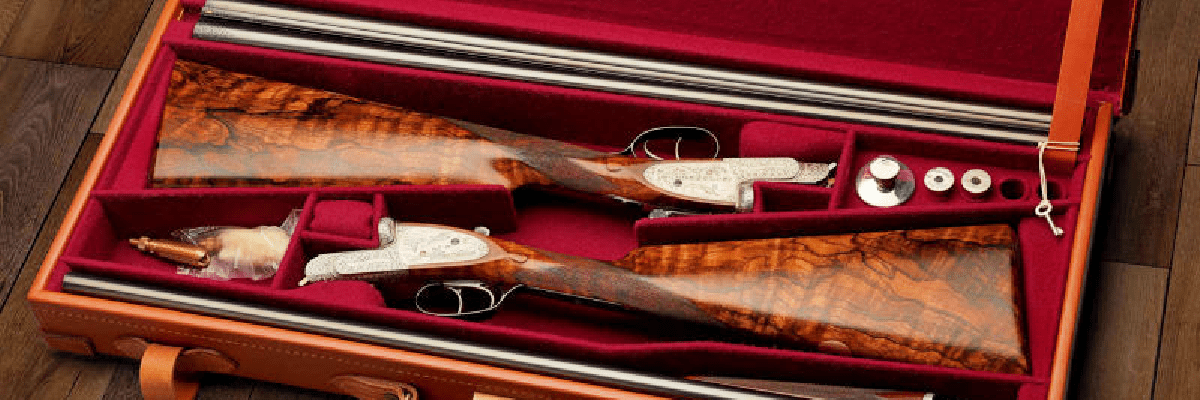
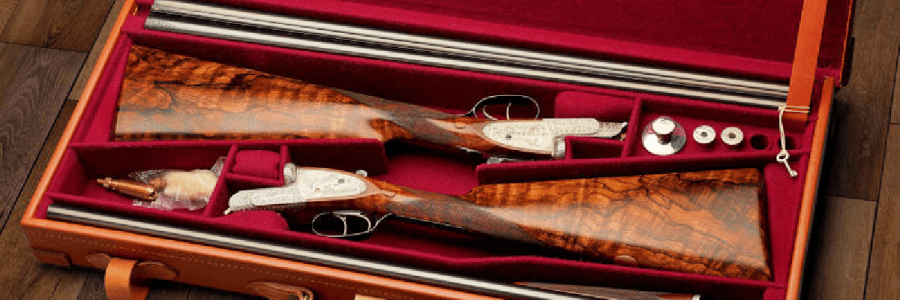
A luxury high-end gunmaker, A.A. Brown & Sons has been producing bespoke arms to order for the most discerning of sportsmen since 1930. A true gunsmiths, the firm produces their own side by side (the Supreme de Luxe model) and an over and under model (the ABAS Series 8), as well as refurbished pieces from various other marques.
LET’S GO SHOPPING…

PURCHASE FROM
A.A. BROWN & SONS
USE THE LINKS BELOW



England’s second-largest city, Birmingham, in the West Midlands, was once the epicentre of the global gun-making industry dating back to 1630 when the first Birmingham-made muskets were recorded.
Whilst gunpowder had been used in military applications for many centuries – first originating in China- it was the development of the arquebus (the first handheld firearm) that would begin to change the way in which wars would be fought. The invention of the matchlock firing mechanism would greatly improve the usability of such weaponry, however it was the musket that would redefine battle – a reliable armament that could effectively penetrate enemy armour.
The introduction of the musket would hasten the expansion of European colonial and imperial territory, with soldiers being equipped with the latest weaponry. Similarly, this expansion would increase trade with many trading partners seeking access to the fine arms manufactured by European gunsmiths. The rise of European imperialism would mark the advent of the gunmaking industry. Although, arguably, the earliest and finest gunsmiths of the middle ages had established themselves in Italy, Spain and the Netherlands (where more elaborately decorated weapons were typically commissioned), it would be England, whose Empire would dominate the others, whose gunmakers would evolve to become the most renowned in the world.
Birmingham emerged as the heart of the English trade producing vast quantities of guns for export across the empire to support the British Army, colonial landowners and enterprises such as the East India Company. Gunmakers could be found across the United Kingdom, with cities like London and Edinburgh being other significant industrial hubs for the sector, however, when the Napoleonic Wars broke out in the early 19th Century, Birmingham would emerge as the industry’s economic powerhouse, with an estimated two thirds of firearms and related components having been manufactured in the region between 1804 and 1817. The Crimean War and, later, the American Civil War would see a surge in demand for Birmingham-made guns with millions of arms being shipped out over these and other campaigns. Wealthy officers, waging war in service to the Empire, or diplomatic staff, dispatched to colonial outposts, would often seek out unique, bespoke and elegantly tasteful custom options for themselves, keeping alive a trade in handmade one-off pieces and more exclusive retail options.
So prolific were the gunmakers of the West Midlands and such was the extent of the importance of the region to the industry, a consortium of the city’s gunsmiths came together to lobby for the formation the Birmingham Proof House. The Proof House was ultimately established by an Act of Parliament in 1813 (the Firearms Act 1813 often referred to as the Proof House Act), being the second in the country to the London Proof House, itself established in 1637 and home to the Worshipful Company of Gunmakers. Weaponry and munitions could now be tested to accredited standards in-city and their products would be marked as proofed – a hallmark of excellence.
This consortium of makers would also form the Birmingham Small Arms Trade Association, which would be the named supplier for many of the weapons which were commissioned during the battles and wars of the period. Fourteen of these gunsmiths were involved in the establishment of the Birmingham Small Arms Company, which continues to trade as BSA Guns today with BSA Motorcycles having spun out of the business.
The majority of the city’s makers, names such as Westley Richards, Rowland Watson, William Tranter, Horton & Sons, William Powell, and Webley & Scott, were located in a defined area of the city that came to be known (and still is) as the Gun Quarter. This area, to the north of the city centre and, traditionally, bounded by Steelhouse Lane, Shadwell Street and Loveday Street, was home to many of the city’s most famous marques and an ecosystem of fabricators and smiths that supported the trade. So significant to the city was this trade that the Gun Quarter is one of only two so-named neighbourhoods therein, the other being the aptly named Jewellery Quarter.
It was on Whithall Street, in the Gun Quarter, that a young gunmaker by the name of Albert Arthur Brown was first recorded in 1929. Plying his trade as a gunmaker and action filer, he worked as a contractor to Clabrough & Johnstone. It was typical within the industry throughout much of its history for many of the components to be manufactured externally (i.e. not by the actual gunmakers themselves), with locks typically being produced in the Black Country, mechanisms, stocks and barrels all being produced in other areas around the West Midlands and sometimes further afield. Many gunmakers did not even have their own showrooms with these typically being third parties. So it was that Albert Brown would produce components for the established makers, expanding his craft and his business to produce more and more of the final product as he added to his team. A master craftsman, he would occasionally fabricate guns for private commissions. By the end of the Second World War, A.A. Brown & Sons, as the firm was now known, would be engaged fully as gunmakers, albeit supplying the trade rather than the general public. A gunmaker’s gunmaker as it were.
The firm benefitted greatly from the demand for mission-capable armaments to equip soldiers during the two Great Wars, producing guns to order for many of the region’s distinguished makers. With an expertise in using mass-production capable machinery, the house was able to produce relatively quickly to meet this need and, unlike other traditional gunsmiths, was able to survive when other producers’ from across Europe and North America were able to furnish ready-made guns for military and other purposes (sporting and agricultural). Nonetheless, the availability of mass-produced weapons would greatly hurt Birmingham’s standing, with many makers closing down – particularly those that engaged in handmade, specialist production. Many of these makers were clients of Brown. The firm managed nonetheless, securing significant work in the manufacture of air pistols to support the burgeoning demand. The firm would later relocate to better support their biggest client, Westley Richards who moved out of the Gun Quarter (marking the decline of that neighbourhood as the home of the city’s gun trade). The gunmakers that remained have mostly re-invented themselves as manufacturers of air rifles for sporting and leisure markets or as makers of high-end, beautifully turned-out sporting rifles in the classic European style.
Ultimately, A.A. Brown & Sons (often abbreviated to ABAS) would relocated outside of the city limits completely, re-establishing themselves in Alvechurch where they continue to produce a range of weapons and undertake bespoke commissions. Their Alvechurch site is also home to the photography studio of Matthew Brown, a great-grandson of the company’s founder. The firm produces their own side by side (the Supreme de Luxe model) and an over and under model (the ABAS Series 8), as well as refurbished pieces from various other marques (including Beretta-based models). The firm is often sought out by shooting enthusiasts who admire the beautiful finish of their in-house pieces. The marque’s bespoke and retail weapons are a testament to the best of British craftsmanship with exquisite detailing and proven reliability.
A.A. Brown & Sons remains under the control of Albert Brown’s descendants and continues to play an active role in the promotion and oversight of the regions’ arms industry. A.A. Brown & Sons guns can be commissioned if you contact them directly, and they have a number of pieces available for immediate purchase. Please note that viewings and visits are by appointment only.
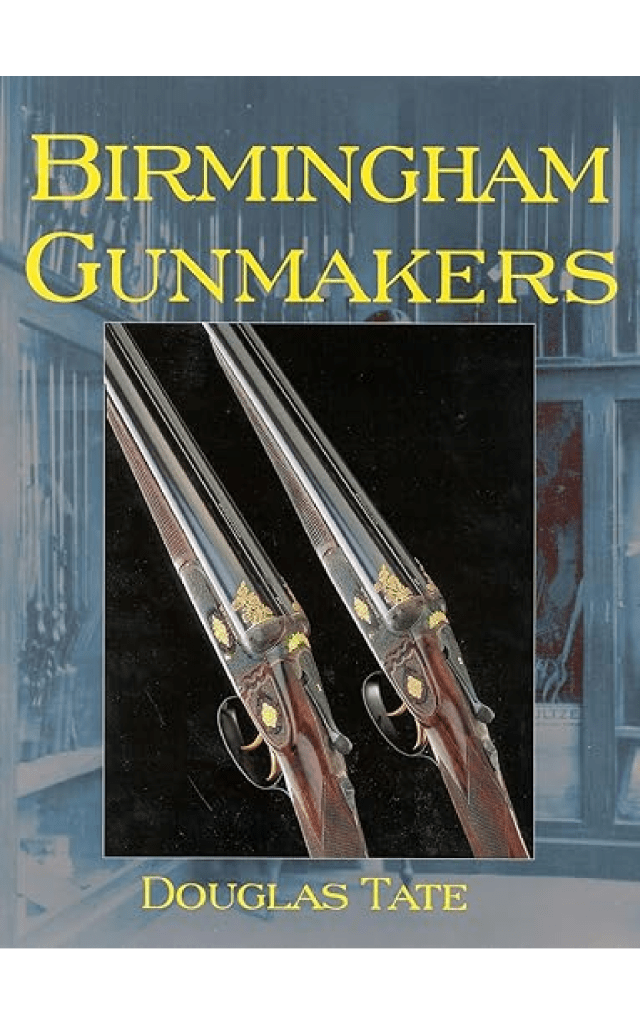
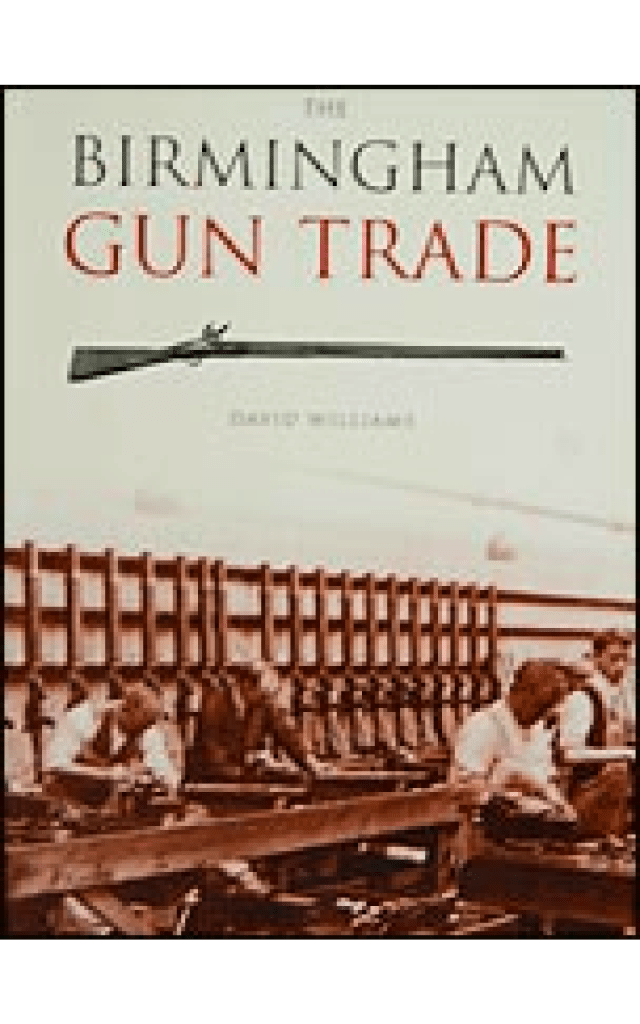
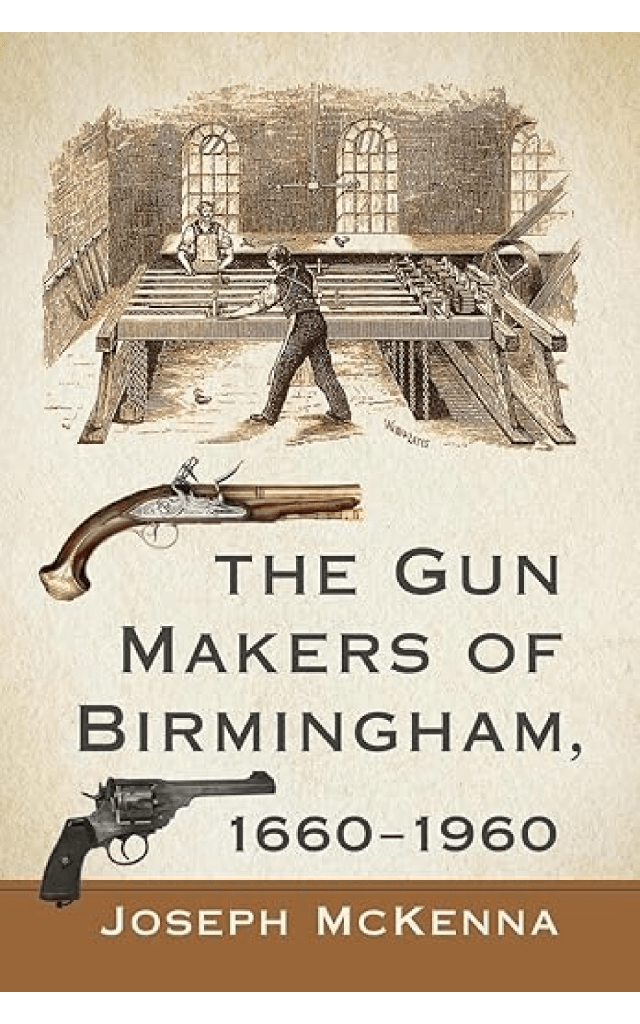
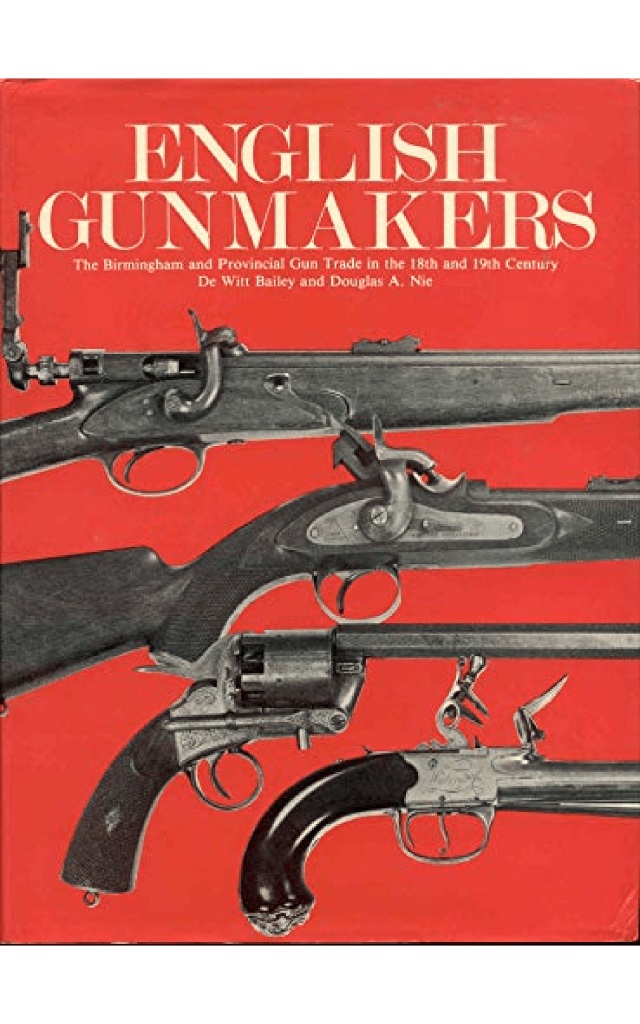
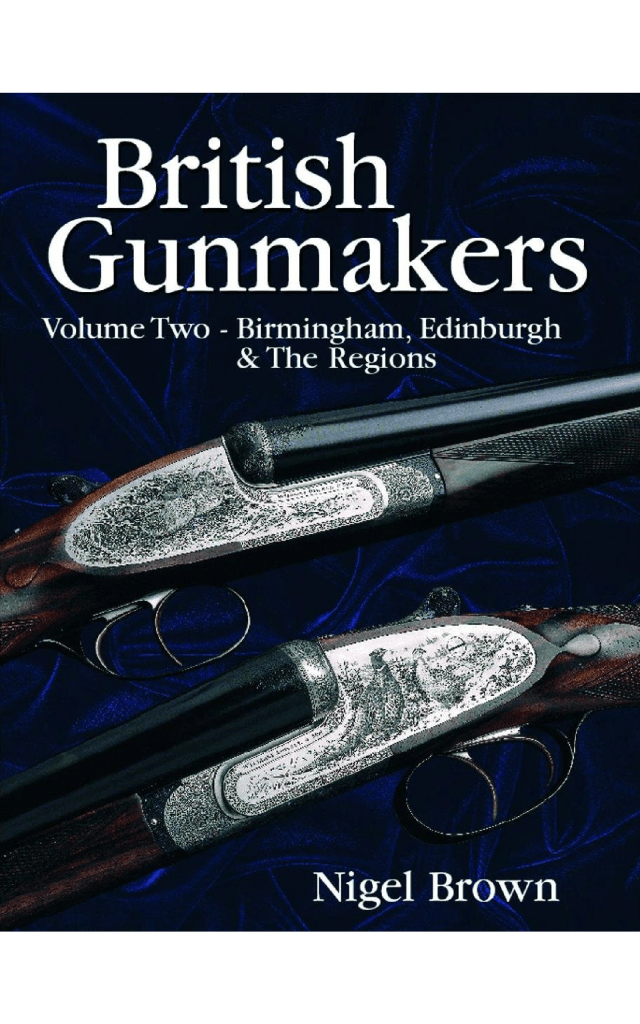
Vintage rifles and arms may be found at other reputable gun dealers or auction houses. Components and brand memorabilia can occasionally be found on eBay (this contains an affiliate link). If you would like to find out more about this brand or the fascinating history of the Birmingham gunmakers, you can read more in the books recommended below (with affiliate purchasing options displayed).
Have you ever owned or used an A.A. Brown & Sons shotgun? Our readers would certainly be keen to hear about your experience and any insights that you think might be useful to inform a potential customer. Please let us know in the comments below.
RECOMMENDED READING
CONTACT INFORMATION
WEBSITE:
EMAIL:
TELEPHONE:
STORE LOCATIONS MAP
CORPORATE INFORMATION
COMPANY NAME:
A.A. Brown & Sons
PARENT COMPANY / OWNER:
–
STOCK SYMBOL:
–
A. A. BROWN & SONS
ABAS

A luxury high-end gunmaker, A.A. Brown & Sons has been producing bespoke arms to order for the most discerning of sportsmen since 1930. A true gunsmiths, the firm produces their own side by side (the Supreme de Luxe model) and an over and under model (the ABAS Series 8), as well as refurbished pieces from various other marques.
SINCE 1930 | ENGLISH / BRITISH | PREMIUM LUXURY HERITAGE BRAND | aabrownandsons.com / birminghamgunmakers.com
BIRMINGHAM
BESPOKE | GUNSMITHS
*Please note that this article contains affiliate links.
Discover more from FITZGABRIELS
Subscribe to get the latest posts sent to your email.
 FITZGABRIELS