
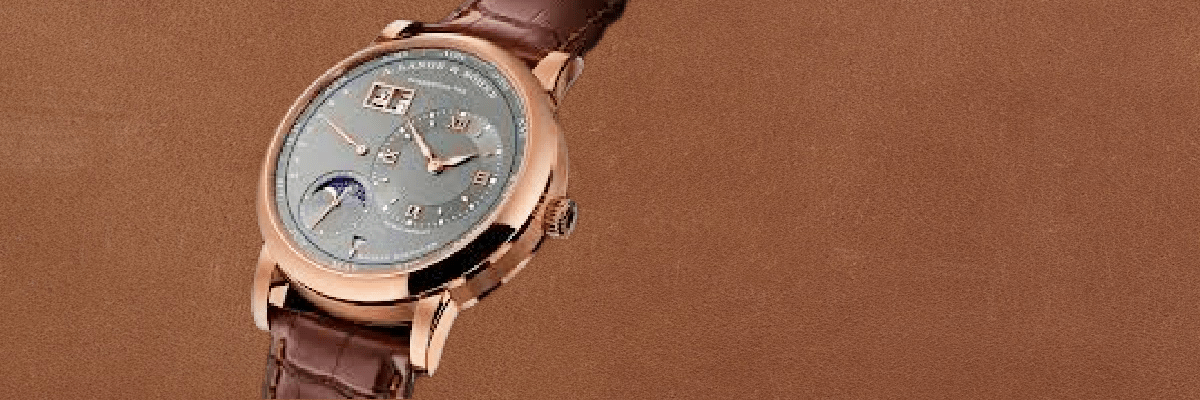
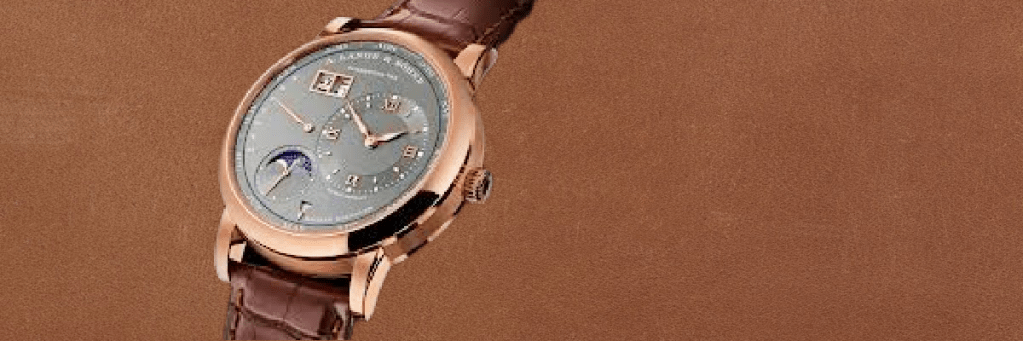
A. Lange & Söhne is a German luxury watchmaker which traces back to 1845 when Dresden-born Ferdinand Adolph Lange established his atelier in Glashütte, Saxony, the home of the German horology industry. Lange’s attention to detail and impeccable engineering, typical of German manufacturing, quickly caught the attention of the most discerning clients, including emperors and royals. Lange timepieces were the preserve of the noblest houses and were in high demand. The company has undergone a number of changes and reincarnations since its initial foundation and, today, is a marque in the Richemont stable of luxury brands. The company remains known for its high-quality movements, excellent finishing, and traditional German aesthetic sensibilities making their watches highly coveted amongst horologists and collectors.
LET’S GO SHOPPING…
PURCHASE FROM
A. LANGE & SÖHNE
USE THE LINKS BELOW



Glashütte is a small town close to the far southern suburbs of Dresden, an important industrial city in East Germany, in the former Kingdom of Saxony. The city is one of Germany’s most culturally and artistically acclaimed cities with an illustrious history. A city that served as the capital of the Saxon state and which has been an epicentre of Prussian, German and Polish intellectualism, art and commerce. Dresden has always been a strategically critical city, a conduit and hub for trade between the East and the West, even in its years behind the Iron Curtain.
Once rich in ore deposits, Glashütte was home to an important ore mining industry that was essential to the manufacturing and development needs of its near neighbour. When those ore reserves were depleted, the town fell into great decline until one visionary introduced an entirely new industry. Ferdinand Adolph Lange opened his legendary workshop in the town in 1845 and set in motion the gears of change that would forever transform the region into a watchmaking powerhouse that would rival the Swiss masters who Lange had sought to emulate.
Lange had overcome great adversity to become a highly-acclaimed and recognised clockmaker in his native Dresden. As a boy, Lange’s parents would separate and it was decided that his circumstances would be better if he were given up for adoption. Fate would look kindly upon him, however, and he was taken into the care of a wealthy foster family who would be the benefactors of a great education for the young Lange, who would doubtful have had the opportunity to undertake detailed study otherwise. Lange would enter the Technische Bildungsanstalt, a prestigious technical and scientific school in Dressden. He was an excellent student who demonstrated great technical understanding and capacity for complicated engineering.
So it was that, at the age of 15, he was been apprenticed to Johann Christian Friedrich Gutkaes, a master clockmaker and eager astronomer. Gutkaes was well-known throughout Germany and served as a senior mechanic and custodian of the Dresden’s Mathematisch-Physikalischer Salon, a museum and institute of study dedicated to clocks, astronomcial study and the craft of mechanical instruments essential to advancing science.
Whilst working alongside Gutkaes, Lange would help to develop the iconic “Five-Minute Clock”, installed in the Semper Oper opera house. The clock was commissioned at the behest of Saxony’s King Frederick Augustus II. A regular guest of the opera, the King had grown increasingly irate at the disturbance caused by the pocket watches of other members of the audience who had activated the chime mechanism to discern the time. Thus the King desired that a clock be installed within the walls of the great chamber of the opera house, that should be visible to all in the audience but that it should not display the traditional round dial common to clocks. An extremely tricky challenge given the limited space in which such a clock could be located.
Gutkaes was considered to be the best man for such a difficult job. He and his erstwhile apprentice would conceive of an entirely new mechanism that would display intervals of five minutes on one side in Arabic numerals whilst the other side displays the hour in Roman numerals. The clock was a marvel and Lange’s destiny began to manifest.
Having completed his apprenticeship, Lange would continue under Gutkaes’ employ for a number of years before embarking on something of a grand tour of Europe. He would seek out the greatest clockmakers and watchmakers across the continent and would undertake employment with them, an horologist stagiaire of sorts. He worked in Paris with Joseph Thaddäus Winnerl, an Austrian watchmaker who invented the split-second chronograph. He worked in England and in Switzerland, all the while expanding his knowledge and attending lectures from the greatest physicists, astronomers and mathematicians to further his scientific and technical understanding.
Eventually, Lange would return to his home in Saxony to realise his lifelong dream of establishing his own workshop. He identified Glashütte as the ideal place from which this dream would crystallise. The economic depression that had befallen the area would provide a readily available workforce, keen to retrain and up-skill within a burgeoning industry. The region’s economic despair would similarly attract subsidy incentives for new industry which his workshop would take maximum advantage of. Lange would work with local foundaries and manufactories to assemble parts and components with the agenda of ensuring the entire watchmaking process and supply chain would be kept local to Glashütte, thus incubating what has become a booming industry with many famous names associated therewith.
This success would meet serious obstacles in the 1930s when Germany would seek to increase efficiencies in industrialised processes and seeded the mass production of automatic watches: affordable and available to the general public. Demand for high-end mechanical watches had declined substantially due to restrictions on cross-border trade and the economic climate following the First World War. Seized by the rise of nationalism and a widespread program of nationalising key industries and production facilities, many of Lange’s remaining competitors would be merged into a state enterprise.
The Lange house resisted and saw a resurgence in demand for the traditional mechanical watch with its famed precision when German efforts began towards preparedness for the Second World War. Such efforts would require a degree of integration with the state’s watchmaking apparatus.
When the second Great War finished, Lange and other German watchmaking brands of the Glashütte region found themselves in the Soviet-controlled East Germany. They would be merged into a single state operator and the brand would all but disappear outside of the world of collectors of rare watches.
Like a phoenix rising from the ashes, the fall of the Berlin Wall would mark a pivotal moment for the Lange name. German reunification would inspire Walter Lange, a descendant of the founding family, and his business partner, Günter Blümlein, to reinstitute the brand under the company, Lange Uhren GmbH. They received substantial support from a number of Swiss watchmaking houses, under the Richemont umbrella, who recognised and respected the substantial contribution of Lange and the Glashütte region to the advancement of their sector and were keen to revive an important supply chain for their own maisons. A. Lange & Söhne (commonly abbreviated to ALS) would begin to manufacture beautiful wristwatches again, true to the traditions and the craftsmanship that had made the name so famous.
Today, the brand has the continued backing of luxury brands powerhouse, Richemont, where it sits alongside stablemates including: watchmakers Baume & Mercier, IWC, Jaeger-LeCoultre, Panerai, Roger Dubois and Vacheron Constantin; jewellers Buccellati, Cartier, Piaget, Van Cleef & Arpels and Vhernier; pensmiths Montblanc; gunmakers Purdey; fashion houses Alaïa, Chloé and Peter Millar; luxury goods brands Delvaux, Dunhill and Serapian; shoemakers Gianvito Rossi; and sportswear designer G/Fore.
Lange Uhren employs approximately 500 staff with an output of over 5,000 timepieces each year, all entirely made in-house. Their watches are sold in over fifty countries worldwide through their own boutiques, a network of trusted dealers and through the Richemont-owned Watchfinder & Co. and TimeVallée stores. Many models are available at a wide range of price points, pre-owned on eBay.
A. Lange & Söhne watches are highly sought after, regarded by collectors and enthusiasts alike as the greatest of the German houses and a peer of the most celebrated Swiss manufacturers. In fact, many horologophiles believe that A. Lange & Söhne watches are built to such a high standard to be on par with the so-called “Holy Trinity” of watchmakers (Audemars Piguet, Patek Philippe and Vacheron Constantin). The company’s watches are highly-praised for their reliability, accuracy, and craftsmanship and their historical association with fighter pilots of successive German armies. Limited in their production cycle, A. Lange & Söhne watches are also relatively rare, which substantially adds to their appeal.
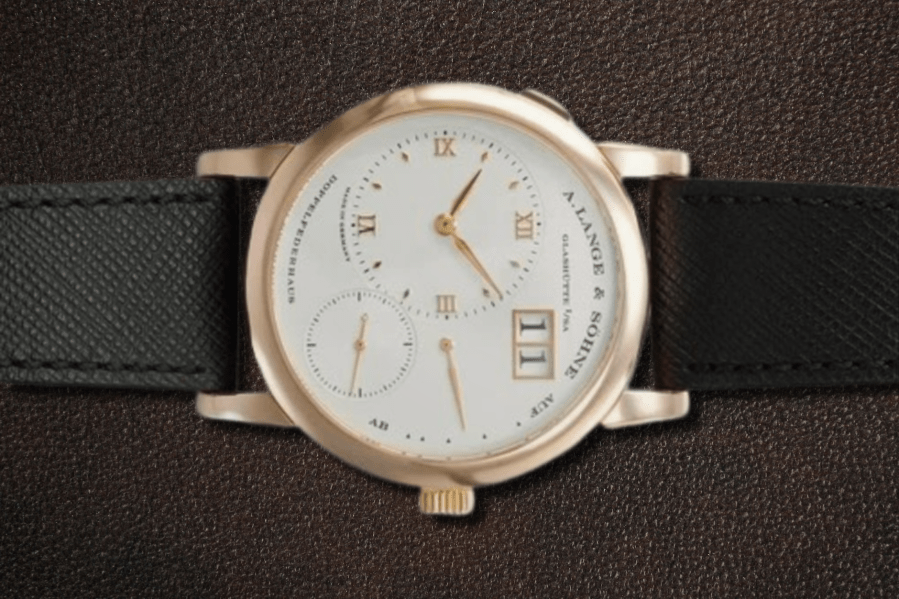
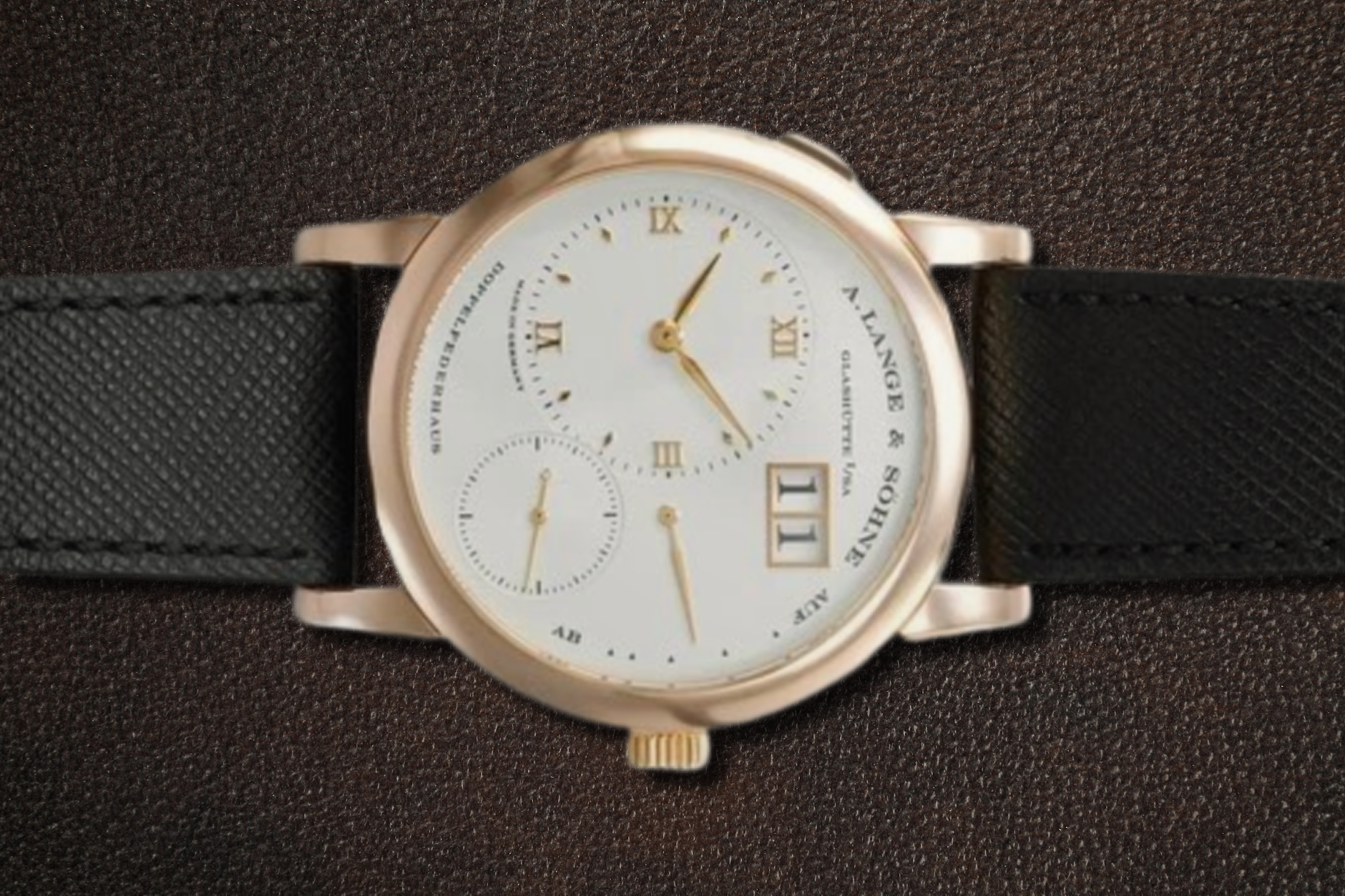
The house’s most popular piece is, undoubtedly, the Lange 1. The model was first introduced in 1994 to great fanfare. It marked the first new Lange watch in decades and was a very clear statement of intent from the fabled house. The flagship model is elegant and timeless, the simplicity of its presentation belying the complicated movement encased within. The face of watch displays a unique off-center dial layout and a large date display, making it immediately identifiable to fans of the brand. The Lange 1 is a registry item for us – recognising it as a collectors’ must-have.
Other important pieces from the Lange brand include the Datograph chronograph, the Richard Lange dress watch, the Langematik and the unusual Zeitwerk, a modern watch that respects the brand’s traditional sensibilities whilst continuing the Lange tradition of pushing forward their engineering excellence.
A. Lange & Söhne watches are generally, expensive – the high price indicating the level of workmanship and the attention to detail and quality that define the brand. They are, however, considered to be some of the best-made watches in the world, honouring generations of master craftsmen and the timeless techniques and processes that culminate in each wristwatch. If you are looking for a high-quality, well-made watch that will last for generations, passed down as an heirloom, an A. Lange & Söhne watch is, truly, a great option.
If you are interested in learning more about A. Lange & Söhne watches, visit the company’s website or visit one of their boutiques and speak to an expert sales representative in person. A. Lange & Söhne maintains a number of boutique stores at premium retail locations around the world and a select few salons where customers may visit by appointment only. In addition, the brand works with many preferred jewellers and retail partners as official distributors in well-established markets.
Are you an enthusiast of the brand? What’s your favourite piece? We are always keen to hear from aficionados of the brand or technicians who may have worked there. Please share your contributions in the comments below.
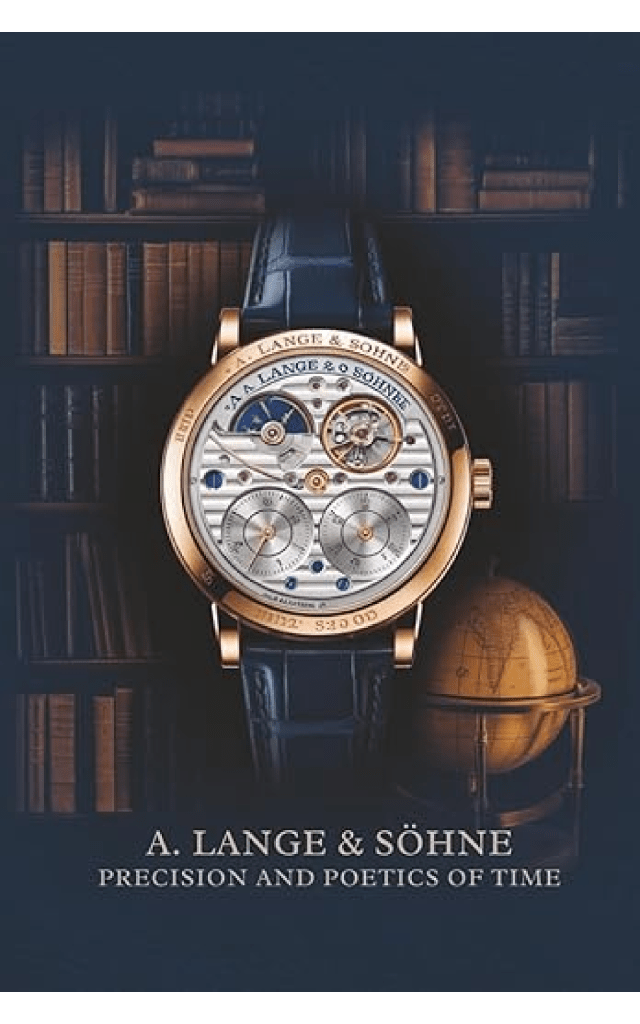
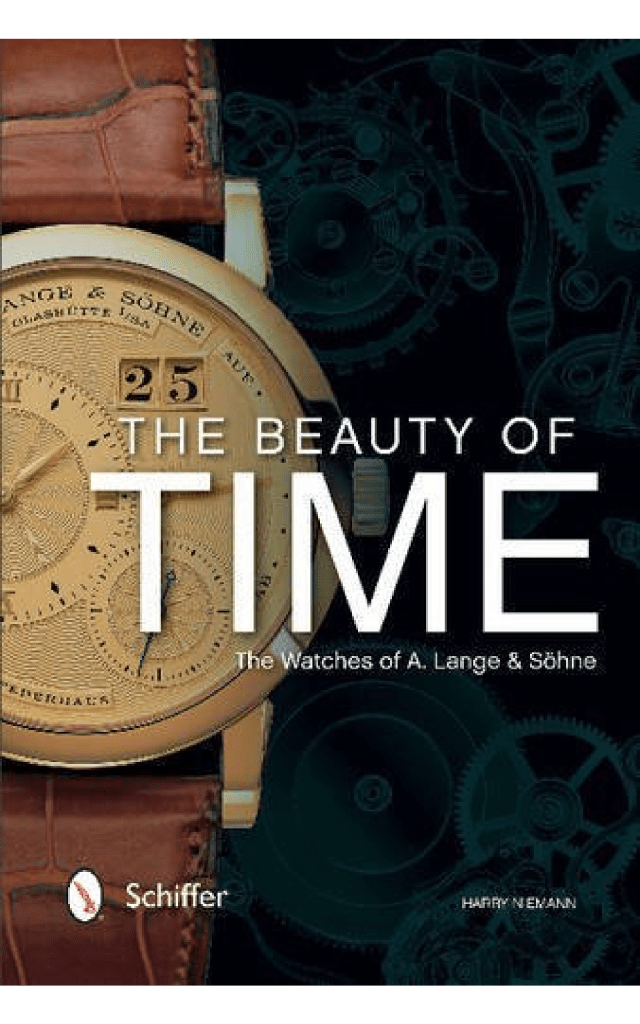
RECOMMENDED READING


CONTACT INFORMATION
WEBSITE:
HEADQUARTERS:
EMAIL:
TELEPHONE:
STORE LOCATIONS MAP
CORPORATE INFORMATION
COMPANY NAME:
Lange Uhren GmbH
PARENT COMPANY / OWNER:
Richemont
STOCK SYMBOL:
CFR
A. LANGE & SÖHNE
ALS

A. Lange & Söhne is a German luxury watchmaker which traces back to 1845 when Dresden-born Ferdinand Adolph Lange established his atelier in Glashütte, Saxony, the home of the German horology industry. Lange’s attention to detail and impeccable engineering, typical of German manufacturing, quickly caught the attention of the most discerning clients, including emperors and royals. Lange timepieces were the preserve of the noblest houses and were in high demand. The company has undergone a number of changes and reincarnations since its initial foundation and, today, is a marque in the Richemont stable of luxury brands. The company remains known for its high-quality movements, excellent finishing, and traditional German aesthetic sensibilities making their watches highly coveted amongst horologists and collectors.
SINCE 1845 | GERMAN | PREMIUM LUXURY HERITAGE BRAND | alange-soehne.com
GLASHÜTTE
TIMEPIECES | WRISTWATCHES
RICHEMONT
*Please note that this article contains affiliate links.
Discover more from FITZGABRIELS
Subscribe to get the latest posts sent to your email.
 FITZGABRIELS